
Research
Overview
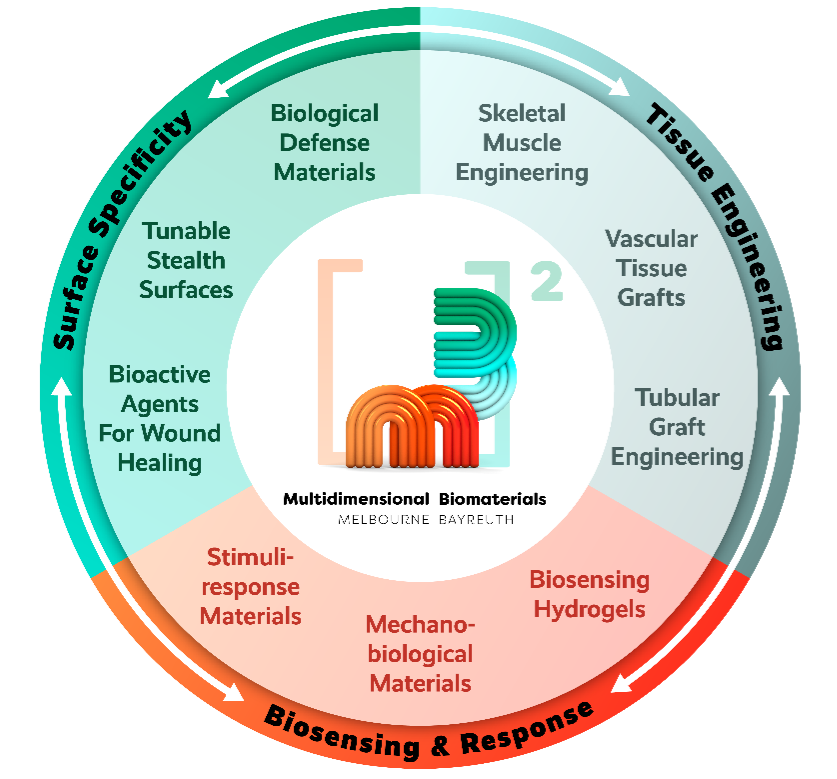
[MB]² comprises 10 interdisciplinary tandem PhD projects, each jointly supervised by researchers from Bayreuth and Melbourne. The projects are grouped into three topical research areas (TRAs). Each PhD student works in a team of at least two on complementary aspects of the same research question.
Topical Research Area 1: Surface Specificity
Biomaterials in clinical use must selectively interact with desired cell types while simultaneously resisting microbial colonisation and biofilm formation. The three projects in this area develop novel protein-based, polymer-based, and nanostructured surface coatings and functionalisation strategies to achieve precisely this cell selectivity.
Project 1 | Design of New Protein-Based (Coating) Materials with Biological Defence Properties
Topical Area
Surface Specificity
Supervisors
Prof. Dr. Seema Agarwal (UBT) · Prof. Dr. Greg Qiao (UOM) · Prof. Dr. Thomas Scheibel (UBT)
Project Description
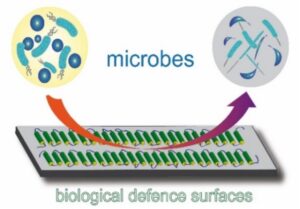
Microbial attachment to biomaterial surfaces is a leading cause of implant-associated infections. This project develops new antimicrobial coatings that prevent biofilm formation through a dual strategy: microbe-repellent surfaces (preventing initial adhesion) and contact-killing surfaces (eliminating bacteria upon contact). The approach combines three complementary material systems: engineered spider silk proteins (Scheibel), synthetic antimicrobial polypeptides including SNAPPs and SAMPs (Qiao), and guanidine-containing polymers (Agarwal). The resulting coatings must balance antimicrobial efficiency with biocompatibility towards human cells.
PhD Topics
- Transfer of microbe repellence properties of spider silk materials onto catheters upon coating (TS)
- Amphiphilic design of guanidine-containing synthetic polymers for contact-type antibacterial behaviour (SA)
- Synthesis of antibacterial polypeptide brushes/surfaces and other polymers (GQ)
- Analysis of effects of polyguanidine–peptide conjugate architectures on biological defence (SA)
- Chemical conjugation of engineered spider silk materials with amphiphilic synthetic polymers (TS)
- Development of antibacterial fibres comprising natural and synthetic polypeptides (GQ)
Connections to other projects: Analytical methods (optical tweezers, FluidFM) from Projects 2 & 4; antimicrobial compounds feed into wound dressings (Project 3) and scaffold materials (Projects 7, 9, 10).
Project 2 | Quantifying Interactions Between Tuneable Stealth Surfaces and Immune Cells
Topical Area
Surface Specificity
Supervisors
Prof. Dr. Kristian Kempe (MOU) · Prof. Dr. Holger Kress (UBT)
Project Description
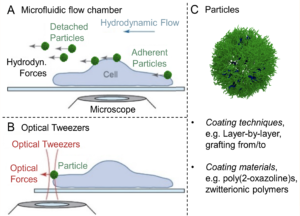
Particles for drug delivery must evade phagocytic immune cells in the bloodstream. This project develops and characterises next-generation stealth polymer coatings – including poly(2-oxazoline)s and zwitterionic polymers – and quantifies their interactions with phagocytic immune cells (monocytes, neutrophils) using microfluidic chambers and optical tweezers. The project provides design guidelines for optimal stealth surface coatings, addressing the limitations of conventional PEG-based approaches.
PhD Topics
- Development of new stealth polymer particle coatings (KK)
- Screening of interactions between new stealth organic-inorganic hybrid particles and cells with microfluidic chambers (HK)
- Evaluation of coating approaches for improved stealth particle surfaces (KK)
- In-depth investigation of particle–cell interactions with optical tweezers (HK)
Connections to other projects: Methods feed into analysis of coatings from Project 1; biocompatible polymers used in hydrogels of Project 7; strong link to Project 3 (Leiske postdoc in Kempe group); complementary technique to FluidFM of Project 4.
Project 3 | Multidimensional Layered Nonwoven Meshes for Controlled/Triggered Release of Drugs and Bioactive Agents for Wound Dressing Applications
Topical Area
Surface Specificity
Supervisors
Prof. Dr. Meike Leiske (UBT) · Prof. Dr. Laurence Meagher (MOU)
Project Description
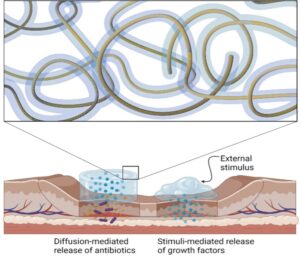
Wound healing requires delivery of multiple therapeutic agents over different time frames. This project develops a versatile, multilayer wound dressing platform combining electrospun polymer nonwoven meshes (Meagher) with stimuli-responsive hydrogel coatings (Leiske). The modular design allows controlled and triggered release of antimicrobial agents and pro-healing bioactives (e.g. growth factors, RNA-based drugs), addressing both acute and chronic wound types.
PhD Topics
- Stimuli-responsive hydrogel coatings on electrospun nonwoven meshes for triggered release of bioactive agents (ML)
- Controlled release of novel antimicrobial bioactives from multidimensional nonwoven, polymer-coated materials (LM)
- Intrinsically antimicrobial hydrogel coatings with tailored stimuli-response and enhanced biocompatibility (ML)
- Pro-healing antibacterial multidimensional nonwoven wound dressings with controlled/triggered release mechanisms (LM)
Connections to other projects: Antimicrobial materials from Project 1; biocompatible polymers from Project 2; connection to Project 5 (drug release under skin conditions); stimuli-responsive materials for Project 8; safety evaluation with Project 7.
Topical Research Area 2: Biosensing & Response
Monitoring how biomaterials behave in biological environments – and enabling them to respond to external stimuli – is essential for next-generation smart biomaterials. The four projects in this area develop novel stimuli-responsive materials, wearable biosensors, and electrochemical sensing platforms.
Project 4 | Tuneable and Stimuli-Responsive Materials from Metal–Phenolic Gels
Topical Area
Biosensing & Response
Supervisors
Prof. Dr. Frank Caruso (UOM) · Prof. Dr. Georg Papastavrou (UBT)
Project Description
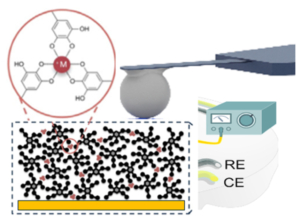
Metal–phenolic materials offer a versatile platform for assembling three-dimensional functional materials with tuneable mechanical and biochemical properties. This project engineers such gels for biomedical applications by systematically tuning gel composition (including incorporation of drugs, nanoparticles, conductive materials) and characterising their properties at the nanoscale using AFM-based indentation and fluidic force microscopy (FluidFM). Stimuli-responsive systems responsive to electrochemical, pH, magnetic, and electrical signals are developed for applications including cell harvesting.
PhD Topics
- New approaches towards tuneable and stimuli-responsive metal–phenolic hydrogels for tissue engineering (FC)
- Electro-mechanical characterisation and control of metal–phenolic hydrogels on the nanoscale (GP)
- Stimuli-responsive metal–phenolic hydrogels: applications in cell harvesting (FC)
- Electro-stimulus responsive hydrogel systems based on metal–phenolic hydrogels (GP)
Connections to other projects: FluidFM/AFM platform supports characterisation across IRTG; complementary to optical tweezers of Project 2; links to electrochemical systems of Project 6; benchmarking actuation with Project 8
Project 5 | Wearable Sweat Biosensors Using Aptamer-Functionalized Nanohydrogels
Topical Area
Biosensing & Response
Supervisors
PD Dr. Martin Humenik (UBT) · Prof. Dr. Nicolas Voelcker (MOU)
Project Description
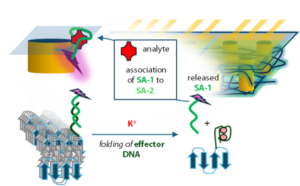
This project develops a wearable platform for real-time monitoring of sweat biomarkers (with a focus on cortisol, a stress biomarker) by integrating three components: electrospun recombinant spider silk protein (RSSP) meshes (Humenik), aptamer-functionalised nanohydrogel coatings, and a microfabricated conductive micro-pillar array (MPA) sensor platform (Voelcker). A split-aptamer sensing architecture enables selective and sensitive detection of analytes in sweat without enzymatic chemistries, providing a generalizable platform adaptable to a wide range of biomarkers.
PhD Topics
- Engineering aptamer-functionalised nanohydrogels on electrospun RSSP meshes (MH)
- Microfabricated aptamer-functionalised and conductive micro-pillar platforms (NV)
- Stimuli-responsive functionalisation of nanohydrogel coatings on fibrous sensor substrates (MH)
- Integration of split-aptamer systems into flexible bioelectronic sensors for real-time cortisol monitoring (NV)
Connections to other projects: FluidFM from Project 4 for characterisation; drug release exchange with Project 3; sensing exchange with Project 6; aptamer detection adaptable to growth factors in Projects 7, 8, 9, 10.
Project 6 | Duplex Biostimulating / Biosensing Hydrogel Scaffolds for Neural Interfaces
Topical Area
Biosensing & Response
Supervisors
Prof. Dr. Simon Moulton (SUT) · PD Dr. Alla Synytska (UBT)
Project Description
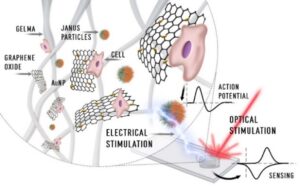
Precise spatial and temporal control of neuronal stimulation and real-time monitoring of the chemical microenvironment within 3D cell culture systems are key unmet needs. This project develops composite GelMA hydrogels incorporating photosensitive gold nanoparticles (optical stimulation), graphene (electrical stimulation), and core-shell Janus particles with immobilised enzymes (biosensing) to simultaneously stimulate and sense neural cell responses. The integrated platform enables real-time electrochemical readout during 3D co-stimulation.
PhD Topics
- Synthesis and understanding of interfacial properties of conductive patchy and Janus particles with immobilised enzymes (AS)
- Optimisation of composite development and investigation of 3D fabrication of materials (SM)
- Fabrication of core-shell-particle-based biosensors and study of electrochemical reactions (AS)
- Incorporation and characterisation of a sensing component into 3D composites (SM)
Connections to other projects: Electrochemical systems from Project 4; sensing exchange with Project 5; stimulated nerve guides in Project 7; sensing for skeletal muscle in Project 8; in vitro testing for extravasation with Project 9.
Project 7 | Harnessing Mechanobiology to Advance Skeletal Muscle Tissue Engineering
Topical Area
Biosensing & Response
Supervisors
Prof. Dr. Dr. E. Ada Cavalcanti-Adam (UBT) · Prof. Dr. Jessica Frith (MOU) · Prof. Dr. Daniel Heath (UOM)
Project Description
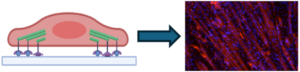
Skeletal muscle is a complex, hierarchical, and mechanically sensitive tissue. Musculoskeletal disorders affect over 1.6 billion people worldwide. This project develops tuneable-stiffness biomaterials with controlled spatial distribution of integrin-, syndecan-4-, and dystroglycan-binding ligands to dissect the role of mechanobiology in skeletal muscle, tendon, and myotendinous junction (MTJ) tissue engineering. Reporter cell lines and advanced 3D bioprinting are used to generate physiologically relevant skeletal muscle constructs.
PhD Topics
- Investigating the mechanisms of cellular adaptation to mechanically engineered environments using reporter systems (AC)
- Developing biomaterials for skeletal muscle tissue engineering with control over type and nanoscale patterning of cell adhesive ligands (DH)
- Discovering the molecular regulation of skeletal muscle mechanotransduction by ligand type and patterning presentation (AC)
- Fabricating hierarchical and mature engineered skeletal muscle with MTJ structures using advanced 3D bioprinting (DH/JF)
Connections to other projects: Novel polymers from Project 2; magnetic stimulation technology from Project 8; vascularisation strategies from Projects 9 & 10; testing technologies from Projects 4 & 5; confirms safety of materials from Projects 1, 3, 6.
Topical Research Area 3: Tissue Engineering
Building functional three-dimensional tissue constructs that can eventually be used in clinical applications requires precise control over scaffold architecture, cell-material interactions, and vascularisation. The three projects in this area tackle skeletal muscle, tubular vascular grafts, and fully vascularised 3D tissue constructs.
Project 8 | Tailored Biomaterials for Stimulated Skeletal Muscle Tissue Engineering
Topical Area
Tissue Engineering
Supervisors
Prof. Dr. Andrea O’Connor (UOM) · Prof. Dr. Sahar Salehi-Müller (UBT / University of Hohenheim)
Project Description
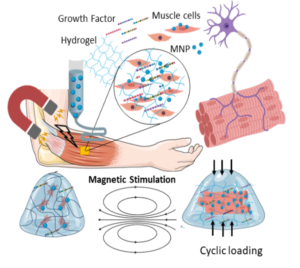
Severe skeletal muscle damage (e.g. from tumour ablation or large volume loss injuries) cannot heal spontaneously. This project uses magnetically responsive hydrogels (ferrogels) containing superparamagnetic nanoparticle gradients to achieve both structural anisotropy and dynamic magnetic stimulation of skeletal muscle cells (SMCs) via mechanotransduction. Hierarchically magnetically responsive 3D bioprinted constructs are produced for in situ tissue engineering of skeletal muscle and neuromuscular junctions.
PhD Topics
- Composite ferrogel-based bioinks for gradient 3D bioprinting of SMCs (SSM)
- Influence of dynamic magnetic stimulation on cell and tissue function of labelled SMCs in 2D and 3D models (AO)
- Magnetic stimulation and cyclic mechanical loading of 3D bioprinted composite ferrogel-based bioink containing SMCs (SSM)
- Magnetic constructs for tissue engineering of skeletal muscle to treat volumetric muscle loss and regenerate neuromuscular junctions (AO)
Connections to other projects: Stimulus-responsive materials from Project 3; stimulation system analysis and mechanical response of particles from Project 4; muscle cell differentiation stage analysis from Project 5; mechanobiology for myotendinous junction from Project 7; electrochemical sensing from Project 6; optical tweezers from Project 2.
Project 9 | Controlling Cell Specificity for Tissue Engineered Tubular Grafts
Topical Area
Tissue Engineering
Supervisors
Prof. Dr. Brooke Farrugia (UOM) · Prof. Dr. Leonid Ionov (UBT)
Project Description
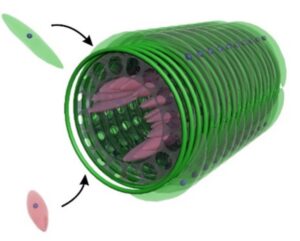
Cardiovascular disease is a leading cause of death worldwide. Current synthetic vascular grafts (diameter < 6 mm) suffer from high failure rates due to thrombus formation and lack of cell specificity. This project develops tubular fibrous constructs via melt-electrospinning and functionalises their inner and outer surfaces with biomimetic extracellular matrix molecules (heparan sulphate and glycosaminoglycan family members) to spatially guide endothelial cell and smooth muscle cell self-assembly.
PhD Topics
- Fabrication of tubular scaffolds with programmed structure and mechanical properties (LI)
- Selection and evaluation of naturally derived biomimetic materials to spatially control endothelial and smooth muscle cells (BF)
- Investigation of effect of structure and mechanical properties of fibrous scaffolds on their interactions with cells (LI)
- Investigation of immobilisation modalities for binding biomimetic materials onto tubular scaffolds (BF)
Connections to other projects: Materials for fibrous scaffolds from Project 1; fibre characterisation and porous material exchange with Project 3; cell–material interaction understanding with Project 5; surface characterisation with Project 6; vascularisation exchange with Projects 7, 8, 10.
Project 10 | Engineering Transplantable 3D Vascularised Tissue Grafts
Topical Area
Tissue Engineering
Supervisors
Prof. Dr. Andrea O’Connor (UOM) · Dr. Matthias Ryma (UBT) · Prof. Dr. Thomas Scheibel (UBT) · Veronica Glattauer (CSIRO, associated)
Project Description
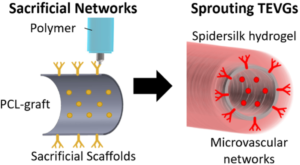
Vascularisation is the central unresolved challenge in tissue engineering: without an immediate blood supply, large engineered tissues cannot survive after implantation. This project develops biomaterials and fabrication methods to produce engineered tissues with a microvascular network directly connected to a perfusable, suturable tissue engineered vascular graft (TEVG). Freeform printing of sacrificial polymers creates channel networks, which are lined with endothelial cells using endothelial cell-specific spider silk/collagen hybrid hydrogels.
PhD Topics
- Processing of spider silk-REVD/collagen interpenetrating networks onto electrospun tubular grafts (TS)
- Engineering hierarchically vascularised and transplantable tissues around tissue engineered vascular grafts (AO)
- Freeform printing of sacrificial polymers onto electrospun grafts to generate vascularised tissue grafts (MR)
- Engineering scalable vascularised 3D tissues for reconstructive surgery (AO)
Connections to other projects: Magnetic biomaterials from Project 8 for vascularised muscle tissue; extension of tubular grafts from Project 9 to complex vascular networks; spider silk hydrogel expertise supporting wearable sensors in Project 5; reporter cell lines from Project 7; cell-selective and microbe-repellent modifications from Project 1.